Transforming Emotional Patterns Through Facial Acupuncture
By Michelle Gellis, AP, LAc, Dipl. Ac.
Every time an acupuncturist treats the face, they may be doing far more than smoothing a line or lifting a contour. They may also be interrupting a pattern—one that has been reinforced through facial expression for twenty, thirty, or even forty years.
This is part of what makes facial acupuncture so extraordinary. Rather than temporarily limiting muscular movement, it works with the relationship between the face, the nervous system, and emotional expression.
The Face as a Feedback System
The face is not simply a surface. It is part of a dynamic feedback system connecting facial expression, sensory information, emotional experience, and the nervous system.
Many of the muscles of facial expression attach directly to the skin. To fully express emotions such as anger, sadness, happiness, grief, worry, and fear, these muscles must work together in a coordinated way.
When facial muscles become weak from underuse or chronically tense from habitual expression, changes can develop. In a cosmetic context, these patterns may contribute to lines, wrinkles, asymmetry, or altered facial contours. In a neuromuscular context, they may be associated with restricted movement, discomfort, or impaired facial expression.
Facial movement is also an important part of nonverbal communication and social development. Our expressions affect how others respond to us—and may influence how we perceive and experience our own emotions.
Neurotoxins temporarily reduce muscular activity. Facial acupuncture takes a different approach: it seeks to support healthy movement, circulation, nerve function, and more complete facial expression.
Clinical Tools for Working With Facial and Emotional Patterns
Acupuncture offers practitioners several tools for addressing the muscular, neurological, and energetic patterns reflected in the face.
Facial Motor Points
Each muscle of facial expression has corresponding motor points. These points can be used to help rehabilitate muscles that have become overly tense, inhibited, or weak.
Motor-point acupuncture can be particularly useful when treating facial asymmetry, diminished expression, muscle imbalance, and certain neuromuscular facial conditions.
Scalp Acupuncture
Scalp acupuncture can be used to stimulate areas associated with facial movement and sensory function. It may be incorporated into treatments for facial paralysis, stroke recovery, neuropathy, and other conditions affecting the face.
Submuscular and Intramuscular Needling
Submuscular and intramuscular techniques allow the practitioner to work directly with specific facial muscles and patterns of tension.
These methods may also be helpful for patients who have received neurotoxin injections and want to support healthy facial function as the effects gradually diminish. When treating a patient following neurotoxin injections, I generally recommend waiting approximately three weeks before needling the treated areas.
Facial Cupping and Gua Sha
Facial cupping and Gua sha can encourage circulation, soften areas of muscular and fascial restriction, and support more fluid facial movement.
These modalities may be especially helpful following illness, injury, Bell’s palsy, stroke, or trauma involving the face, neck, or head. Techniques should always be adapted to the patient’s condition and stage of recovery.
Body Acupuncture Points
The face should never be treated in isolation.
Body acupuncture points can address the underlying constitutional and emotional patterns contributing to facial tension or inhibited expression. For example, patterns associated with Liver qi stagnation may contribute to chronic tension across the forehead, between the eyebrows, or around the jaw.
By supporting the smooth movement of qi and blood throughout the body, treatment may help patients express themselves with greater ease.
The Beauty of Whole-Body Medicine
What sets acupuncture apart is its refusal to view the face merely as a collection of muscles, lines, and contours to be managed.
By understanding the channels, substances, muscles, nerves, and energetic relationships connecting the body and face, practitioners can work toward restoring not only movement, but also the fluid expressiveness that makes each person recognizable and unique.
The goal is not simply to enable a smile.
It is to enable a complete one.
Learn More About Treating Facial Expression
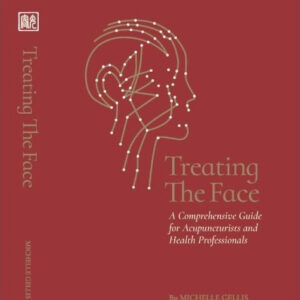
I explore these concepts and techniques in greater depth in my book, Treating the Face: A Comprehensive Guide for Acupuncturists and Health Professionals, including the chapter “The Anatomy of Expression.”
I also offer a full-length recorded webinar devoted to the anatomy of facial expression and the clinical use of acupuncture to address muscular, neurological, and emotional patterns in the face.