Why Facial Acupuncture Training Is More Important Than Ever for Acupuncturists
The acupuncture profession is changing. As acupuncture schools close, healthcare professions overlap, and techniques once associated primarily with acupuncturists become incorporated into other healthcare practices, acupuncturists are increasingly looking for ways to distinguish themselves, expand their skills, and create sustainable practices.
Facial acupuncture training offers an important opportunity to do exactly that.
I have been teaching cosmetic and facial acupuncture for over two decades, and during that time I have watched interest in natural approaches to facial rejuvenation grow dramatically. Patients today are increasingly knowledgeable about their options and many are looking for treatments that can help them look refreshed and healthy without dramatically changing their appearance.
For acupuncturists, this creates an opportunity that extends far beyond cosmetic treatment.
Facial Acupuncture Is More Than Cosmetic Acupuncture
When people hear the term facial acupuncture, they often immediately think of treating fine lines and wrinkles. While cosmetic concerns are certainly an important part of the work, properly trained acupuncturists can address much more.
Facial acupuncture can incorporate traditional acupuncture points along with specialized techniques involving the skin, connective tissue, muscles, circulation, lymphatic system, and neuromuscular function.
Facial Acupuncture Techniques May Include:
- Traditional facial and body acupuncture points
- Intradermal and threading techniques
- Submuscular and intramuscular needling
- Facial motor points
- Facial cupping
- Facial Gua Sha
- Microneedling
- LED light therapy
- Scalp acupuncture
- Constitutional and Five-Element approaches
Understanding which tissues and physiological mechanisms you are attempting to influence allows facial acupuncture to become much more than a collection of cosmetic techniques.
Patients Are Looking for Natural Facial Rejuvenation
Interest in non-surgical and minimally invasive aesthetic treatments has grown substantially. At the same time, many patients want alternatives or complements to injectables, surgery, and other cosmetic procedures.
Facial acupuncture offers something unusual in the aesthetic field: the treatment of the face in the context of the whole person.
Rather than focusing solely on a single wrinkle or isolated area of the face, an acupuncturist can consider circulation, muscle tension, constitutional patterns, stress, sleep, digestion, and overall health as part of a comprehensive treatment strategy.
This whole-person perspective is one of acupuncture’s greatest strengths.
Facial Acupuncture Can Help Differentiate an Acupuncture Practice
One of the challenges facing our profession is increasing overlap between acupuncture and other healthcare disciplines.
Dry needling is performed by physical therapists and other practitioners. Techniques involving needles, microneedling and other traditionally acupuncture-adjacent modalities are increasingly offered in medical, chiropractic and aesthetic settings.
Acupuncturists need areas in which our education and unique understanding of the body provide meaningful differentiation.
Facial Acupuncture Creates a Specialty Within Your Practice
Developing expertise in facial acupuncture can allow practitioners to:
- Expand the range of services offered to existing patients
- Attract patients who may never have considered acupuncture previously
- Develop a specialized area of clinical expertise
- Integrate cosmetic and therapeutic facial treatments
- Increase patient retention and referrals
- Create an additional source of practice revenue
A patient may initially walk through the door because they are interested in facial rejuvenation. Once they experience acupuncture, they often begin to understand its broader potential.
That can introduce an entirely new population to Chinese medicine.
Facial Acupuncture Can Also Address Neuromuscular Conditions
One of the most important reasons to study the face in depth is that facial acupuncture isn’t limited to aesthetics.
Knowledge of facial anatomy, muscle function, motor points and precise needling techniques can also be valuable when treating patients with facial neuromuscular conditions.
These may include conditions such as Bell’s palsy, facial paralysis following stroke, synkinesis, TMJ dysfunction, ptosis, hemifacial spasm and other disorders affecting facial movement and function.
Understanding Facial Anatomy Changes the Way You Needle
When you understand where a muscle originates and inserts, how it moves the face, where its motor point is located and how it interacts with surrounding musculature, your treatment becomes much more precise.
Instead of simply asking, “Which acupuncture point should I use?” you can begin asking:
What tissue am I trying to affect, and what technique is most appropriate for that tissue?
That distinction is fundamental to advanced facial acupuncture.
The Face, Emotion and Chinese Medicine
The face is also deeply connected with emotion.
We communicate with the world through facial expression. Chronic muscular patterns can reflect habitual emotional expression, stress and tension, while changes in facial movement caused by paralysis or neurological conditions can profoundly affect how a person communicates and how they perceive themselves.
Chinese medicine has always recognized the relationship between physical health, emotional well-being and the face.
Facial acupuncture gives us an opportunity to bring traditional Chinese medicine together with contemporary knowledge of anatomy, neuromuscular function, connective tissue and skin physiology.
Why Learn Facial Acupuncture Now?
The acupuncture profession continues to evolve.
As healthcare becomes increasingly competitive, simply offering the same services as every other practitioner may not be enough to build a thriving practice.
Developing specialized skills allows acupuncturists to create something distinctive.
Facial acupuncture is particularly valuable because it bridges several areas of growing patient interest:
natural aesthetics, healthy aging, wellness, stress reduction and integrative healthcare.
And unlike practitioners who learn an isolated needling technique, licensed acupuncturists already possess a sophisticated foundation in acupuncture theory, point location, needling, diagnosis and whole-person treatment.
Specialized facial acupuncture education builds upon that foundation.
Proper Facial Acupuncture Training Matters
Facial acupuncture should not simply be learned by copying a needling pattern.
The face contains delicate anatomical structures, highly specialized muscles, superficial nerves and blood vessels. Effective treatment requires an understanding of anatomy, technique, depth, safety and treatment planning.
Comprehensive facial acupuncture training should teach practitioners not only where to place needles, but also why a particular technique is being used and what tissue or physiological response it is intended to affect.
That is what transforms a technique into a clinical skill.
The Future of Facial Acupuncture
After more than two decades of teaching facial acupuncture, I believe this specialty offers acupuncturists an important opportunity.
It allows us to combine the traditions of Chinese medicine with contemporary understanding of anatomy and physiology while meeting a rapidly growing patient interest in natural approaches to facial health and rejuvenation.
Most importantly, it gives acupuncturists another way to demonstrate the depth and versatility of our medicine.
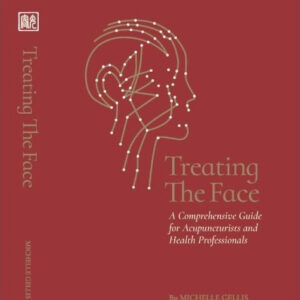
Michelle Gellis, AP, LAc, MAc, DiplAc, is an internationally recognized facial acupuncture educator and author of Treating the Face: A Comprehensive Guide for Acupuncturists and Health Professionals. She has taught facial and cosmetic acupuncture techniques to practitioners internationally for more than two decades.