One of the things I emphasize when teaching facial acupuncture is that knowing which acupuncture points to use is only part of the equation. How you needle a point can be equally important.
In this short video from one of my recent hands-on facial acupuncture classes, I demonstrate a technique using Yuyao, an extra point located in the eyebrow, to help lift and shape the brow.
1. Facial Acupuncture Is More Than Point Selection
When treating the face for cosmetic concerns, I’m not simply inserting needles into a collection of traditional acupuncture points.
I’m considering the underlying anatomy, the direction and function of the facial muscles, the desired treatment effect, and how needle placement and technique can influence the tissues.
The eyebrow is a perfect example.
Brow position is influenced by the interaction of several facial muscles, and subtle differences in needling technique can affect what we are trying to accomplish. Understanding the anatomy beneath the needle allows us to work with greater precision rather than relying on a one-size-fits-all facial acupuncture protocol.
2. Using Yuyao in Cosmetic Facial Acupuncture
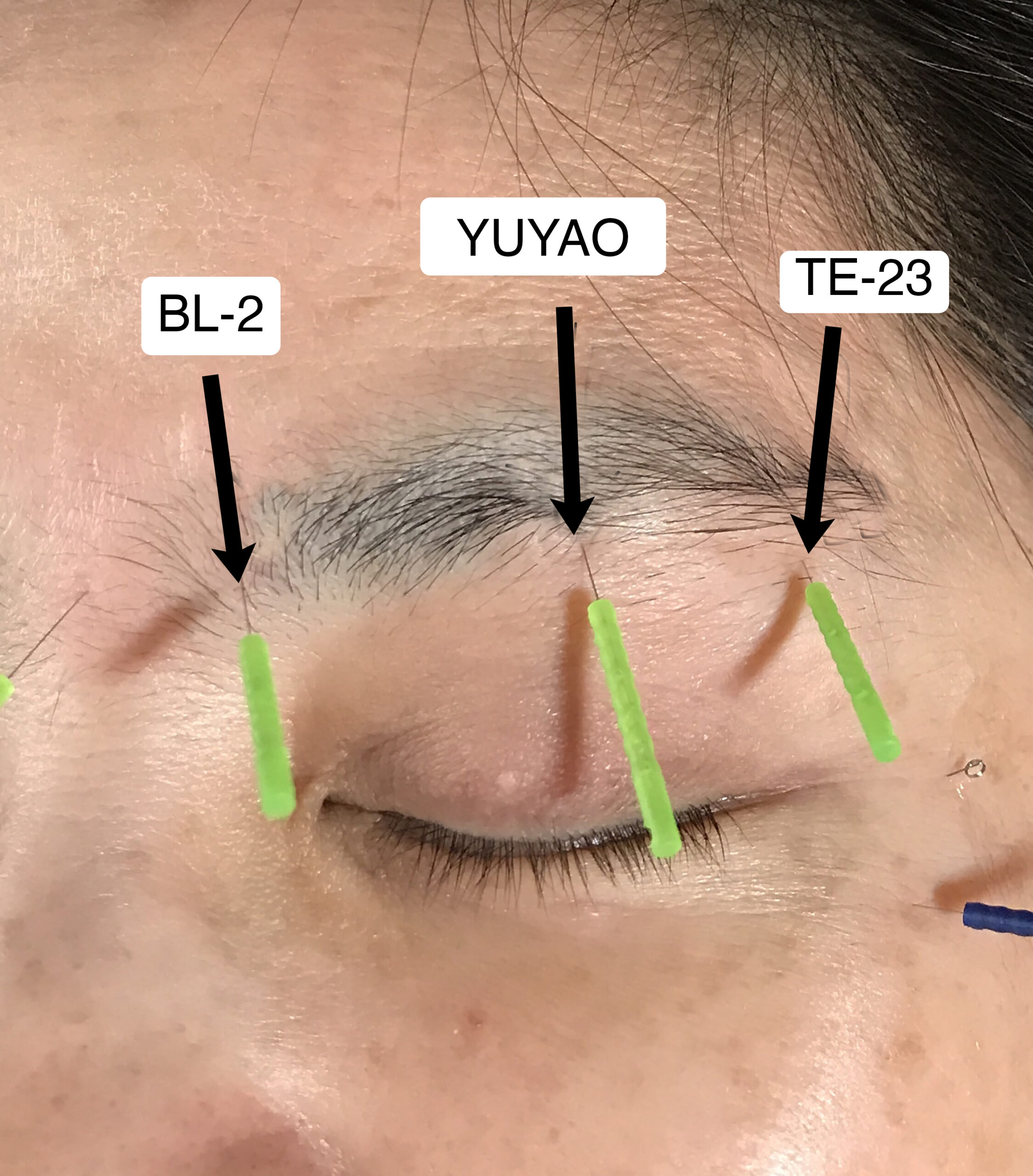
Yuyao is an extra acupuncture point located in the eyebrow and is frequently incorporated into facial acupuncture treatments.
In the video, I demonstrate how I use Yuyao when my treatment goal includes lifting and shaping the eyebrow.
The important lesson, however, isn’t simply where Yuyao is located. Point location is only the beginning. The practitioner also needs to understand what lies beneath and around the point and how the needling technique relates to the desired treatment outcome.
This is where knowledge of facial anatomy and refined needling skills become particularly important.
My technique uses Yuyao as a landmark, but the actual point location is at the center of the pupil, not the center of the brow. This image from my book shows proper location and needling.
3. Why Facial Anatomy Matters
Facial acupuncture requires us to think beyond traditional point functions.
When I teach cosmetic and neuromuscular facial acupuncture, I emphasize understanding the relationship between acupuncture points and the underlying muscles, nerves, connective tissue, and other anatomical structures.
That anatomical knowledge can help practitioners make more thoughtful decisions about:
- Point selection
- Needle placement and direction
- Depth and technique
- Treatment goals
- Safety
It also allows treatment to be individualized rather than applying the same facial acupuncture protocol to every patient.
4. Why Hands-On Facial Acupuncture Training Matters
A textbook or diagram can show you where an acupuncture point is located. A lecture can explain the anatomy, theory, and treatment strategy.
But there is another step: learning how to translate that knowledge into what you actually do with your hands and your needles.
That is where experience matters. I have spent decades in clinical practice and more than 24 years teaching acupuncture, including years as faculty and a clinic supervisor, as well as teaching facial acupuncture practitioners throughout the United States and internationally. Over that time, I have had the opportunity to see not only what techniques work, but also the small differences in angle, depth, direction, positioning, and handling that can significantly affect how a technique is performed.
That is why hands-on practice is such an important part of my facial acupuncture classes.
Students are able to watch a technique demonstrated, practice it themselves, and receive direct supervision and feedback. I can see how they are holding the needle, where they are entering, the direction they are working, and how they are interacting with the tissue—details that can be very difficult to recognize or correct from a diagram or video alone.
Hands-on training is where knowledge becomes technique, and technique becomes something you can confidently bring back to your treatment room.
5. Bringing Traditional Acupuncture and Modern Anatomy Together
My goal when teaching facial acupuncture is not simply for practitioners to leave knowing more points or memorizing more protocols.
I want them to understand why they are choosing a particular point or technique, what they are trying to accomplish, and how to perform that technique safely and precisely.
For me, this is one of the most interesting aspects of facial acupuncture: bringing together traditional acupuncture knowledge, an understanding of facial anatomy, and precision needling techniques to create thoughtful, individualized treatments.
Want to Learn More?
You can learn more about my facial acupuncture classes and upcoming hands-on training here:
UPCOMING FACIAL ACUPUNCTURE CLASSES
You can also explore these techniques in greater depth in my book, Treating the Face: A Comprehensive Guide for Acupuncturists and Health Professionalsd