We spend our working days caring for other people. Our own faces deserve thoughtful care, too.
Facial acupuncture self-care begins with the same skills we bring to patient care: observation, an understanding of anatomy, and a clear treatment goal. A fine line, a deeply held expression, and a change in facial contour may look related, but they do not necessarily call for the same approach.
For trained acupuncturists, the challenge is choosing the right tools and techniques—and recognizing the limits of working on your own face.
Watch: Facial Acupuncture Self-Care
Start with what you see—and what lies beneath
Before selecting points, look at the face at rest and during expression. Is the concern a superficial line, habitual muscle tension, a change in skin texture, or loss of definition? Consider the location and the underlying structures rather than treating every visible crease as an isolated problem.
Facial acupuncture draws on both traditional Chinese medicine assessment and facial anatomy. A useful plan connects the person’s overall presentation with the specific area being addressed. Simply adding more needles does not make a treatment more precise.
Match the needle to the task
Specialized facial needles and intradermal needles serve different purposes. Needle length, diameter, and design affect handling and suitability for a particular technique. Tools for holding very small needles can also make a difference when preparing for precise work.
Traditional point needling, intradermal techniques, and facial threading are distinct approaches. They require their own anatomical knowledge and technical training; they are not interchangeable ways to treat a wrinkle.
Self-treatment adds practical limitations. Visibility, access, and hand position can differ considerably from treating a patient. If you cannot clearly see or comfortably access an area, treatment by another qualified practitioner may be the better choice.
Build a focused self-care plan
Choose a priority rather than trying to address every concern in one session. Identify the area, the intended purpose of treatment, and the technique you are trained to use. Keep a record of what you did and how your skin responded.
Photographs taken with consistent lighting, camera position, and facial expression can help you compare changes more fairly. A different angle or a brighter room can make a face look different even when the treatment has not changed it.
Facial cupping: control matters more than suction
Facial cupping uses small cups and gentle, controlled suction. The amount of suction, movement of the cup, and condition of the skin all matter. Stronger suction is not a shortcut to a better treatment.
Leaving a cup stationary or using excessive suction can cause visible marks and irritation. Facial cupping should be approached as a trained technique, with attention to skin sensitivity and the structures beneath the treatment area.
Microneedling is a different modality
Facial acupuncture uses selected needle placements. Microneedling creates multiple small punctures across a treatment area to produce a controlled skin injury and repair response. Its equipment, treatment planning, and aftercare differ from acupuncture.
Skin condition, medical history, and the device’s instructions all affect suitability. Microneedling can cause redness, irritation, bleeding, pigment changes, and infection. Professional training and appropriate infection control remain essential, including when the person receiving treatment is you.
Learn a structured approach
For a closer look at practitioner self-treatment, explore my Facial Acupuncture Self Care for Acupuncturists CEU Webinar.
To build your broader clinical foundation, my Facial Acupuncture Course: Modules 1–5 covers intake and contraindications, theory and protocols, microneedling, facial cupping, Gua sha, and advanced techniques. You can also browse upcoming hands-on facial acupuncture classes for supervised practice.
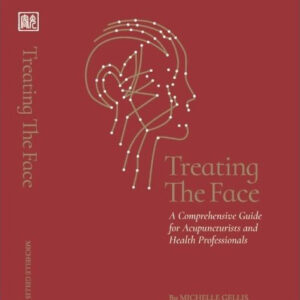
These topics are also explored in my book, Treating the Face: A Comprehensive Guide for Acupuncturists and Health Professionals.
Michelle Gellis, AP, LAc, MAc, DiplAc
Licensed Acupuncturist | Educator | Author
For trained practitioners. This article is an overview, not a self-needling protocol or a substitute for professional training.